
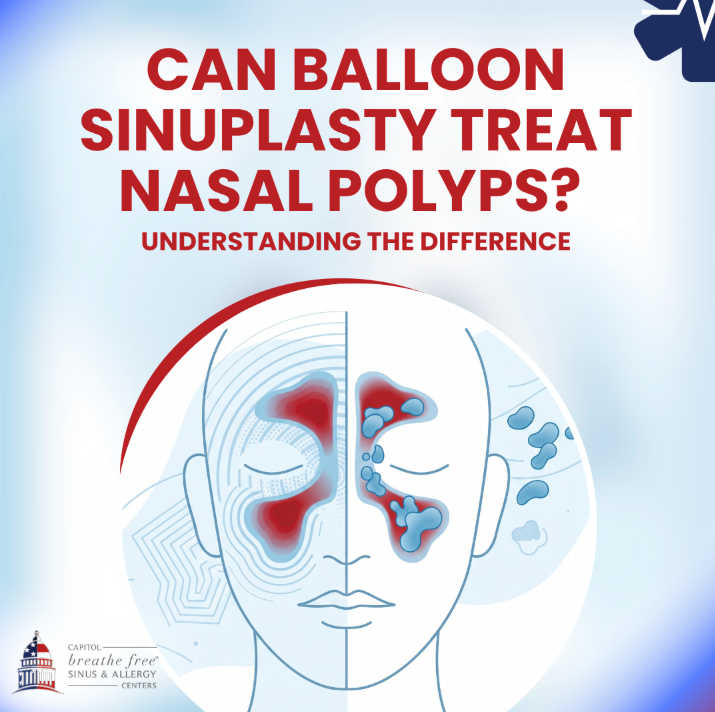
Can Balloon Sinuplasty Treat Nasal Polyps? Understanding the Difference
Persistent nasal congestion, pressure around the eyes, and difficulty breathing through your nose often point to a sinus problem. Those same symptoms can also be caused by nasal polyps, which is why many patients assume balloon sinuplasty can treat nasal polyps. Although the two conditions are closely connected, they are not the same, and they are not treated the same way.
Patients at Capitol Breathe Free Sinus & Allergy Centers in Woodbridge, Virginia are often surprised to learn that balloon sinuplasty is designed to improve sinus drainage, while nasal polyps are soft growths that develop because of long-term inflammation inside the nose or sinuses. Knowing the difference helps you understand which treatment is most likely to improve your breathing and reduce recurring sinus symptoms.
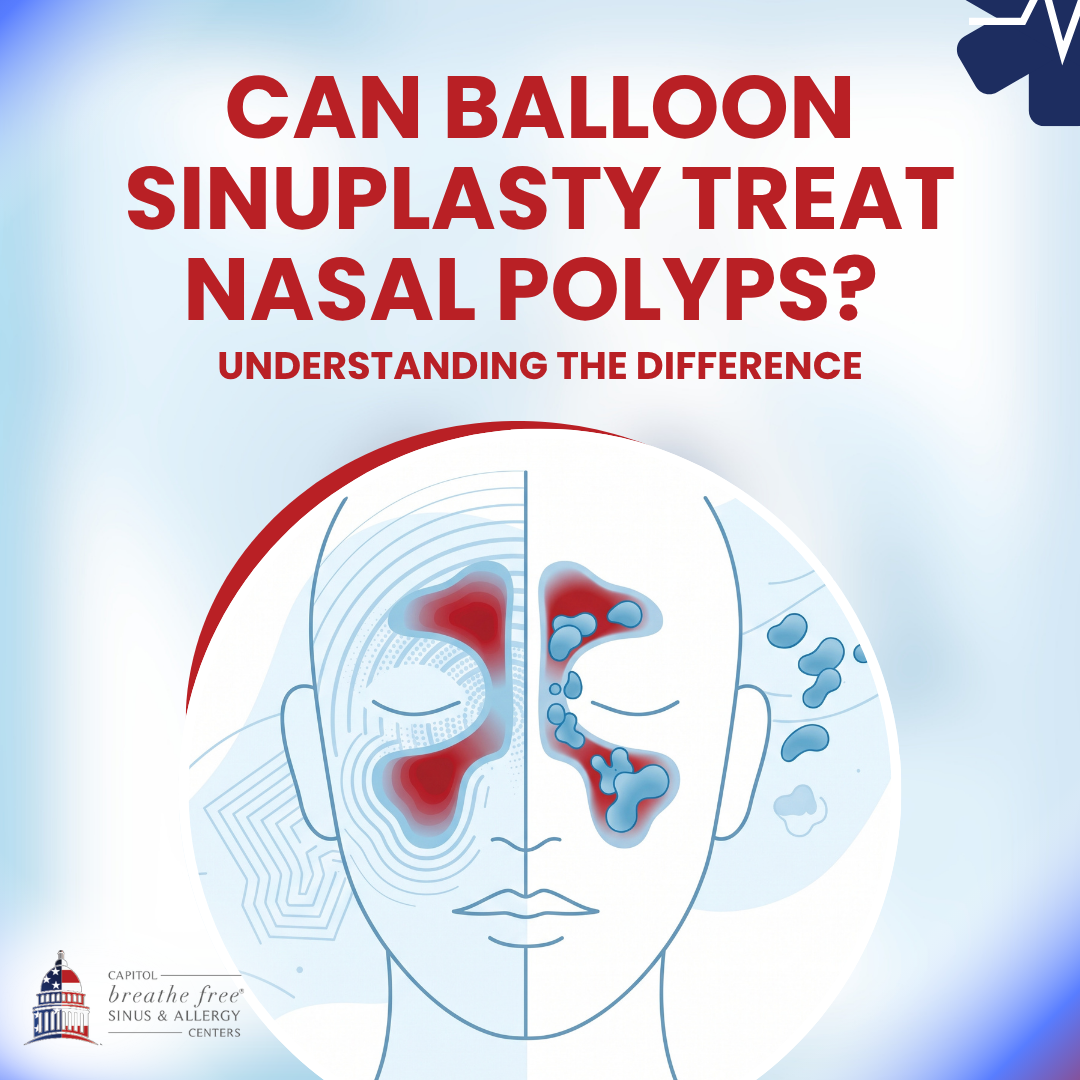
Why Balloon Sinuplasty and Nasal Polyps Are Often Confused
Chronic sinusitis and nasal polyps share many of the same symptoms. Both can make your nose feel constantly blocked, reduce your sense of smell, and cause facial pressure that never seems to go away. Because they often occur together, it's easy to assume they are treated with the same procedure.
The difference is that chronic sinusitis is primarily an inflammatory condition that affects the lining of the sinuses, while nasal polyps are actual growths of swollen tissue. An ENT evaluation helps determine whether inflammation, polyps, allergies, or another issue is causing your symptoms before treatment is recommended.
What Is Balloon Sinuplasty?
Balloon sinuplasty is a minimally invasive procedure that may be used in appropriately selected patients with chronic or recurrent sinusitis to dilate certain sinus drainage pathways. Instead of removing tissue, the procedure gently widens blocked sinus passages so mucus can drain more easily.
A small balloon catheter is placed into the natural opening of the affected sinus. Once inflated, it expands the passageway without cutting or removing bone. The balloon is then deflated and removed after dilating the sinus opening, with the goal of improving sinus drainage.
What Are Nasal Polyps?
Nasal polyps are soft, noncancerous growths that develop from the lining of the nose or sinuses after ongoing inflammation. They vary in size and may appear as a single polyp or multiple growths throughout the nasal passages.
Small polyps may not cause noticeable symptoms. Larger polyps can block airflow, trap mucus inside the sinuses, and increase the likelihood of recurring sinus infections. They often develop gradually, so symptoms may worsen over months rather than appearing suddenly.
Signs Your Symptoms May Be Caused by Nasal Polyps
Nasal polyps often create symptoms that persist even after using allergy medication or over-the-counter nasal sprays. You may notice:
- Constant nasal congestion that affects one or both sides of the nose.
- A reduced or complete loss of smell.
- Postnasal drip or a constantly runny nose.
- Facial fullness or pressure around the cheeks, forehead, or eyes.
- Frequent sinus infections that continue returning.
- Mouth breathing or snoring because airflow through the nose is limited.
These symptoms can overlap with chronic sinusitis, which is why they should be evaluated instead of treated based on symptoms alone.
What Causes Nasal Polyps?
Nasal polyps are associated with chronic inflammation of the lining of the nose and sinuses, although the reasons some people develop them are complex and not fully understood.
Nasal polyps are commonly associated with chronic rhinosinusitis and may occur more often in people with conditions such as asthma or aspirin-exacerbated respiratory disease (AERD). Allergies and other inflammatory conditions may also contribute to nasal symptoms in some patients. In Northern Virginia, pollen, mold, and other environmental allergens can contribute to inflammation that affects both the nose and sinuses throughout much of the year.
Can Balloon Sinuplasty Treat Nasal Polyps?
Balloon sinuplasty does not remove nasal polyps. Its purpose is to open narrowed sinus drainage pathways, not remove tissue growing inside the nose.
If nasal polyps are blocking your nasal passages, widening the sinus openings alone will not eliminate that obstruction. Patients with significant polyps usually need treatment that directly targets the growths themselves.
That does not mean balloon sinuplasty is never part of treatment. Some patients have chronic sinusitis without meaningful polyps, while others have both conditions at the same time. An ENT provider determines which problem is creating the blockage before recommending the next step.
When Balloon Sinuplasty May Still Be Appropriate
Balloon sinuplasty may be recommended when chronic sinus inflammation is preventing normal drainage and imaging shows narrowed sinus openings rather than tissue growths blocking the nasal cavity.
Patients may be candidates if they have:
- Chronic sinus symptoms lasting 12 weeks or longer.
- Recurring sinus infections that return several times a year.
- Facial pressure associated with chronic or recurrent sinus disease.
- Symptoms that have not improved with medication.
- Swelling inside the sinuses without large obstructing polyps.
Because the procedure preserves surrounding tissue, it is often an option for patients whose primary problem is chronic sinusitis rather than nasal polyps.
How Are Nasal Polyps Diagnosed?
A proper diagnosis begins with an examination by an ENT provider. Since nasal polyps are located inside the nasal passages and sinuses, they cannot always be identified during a routine physical exam.
Your evaluation may include a nasal endoscopy, which uses a thin camera to view the inside of the nose, and CT imaging to identify inflammation, blocked sinus passages, and the location of any polyps. Allergy testing may also be recommended if allergies appear to be contributing to long-term inflammation.
How Are Nasal Polyps Treated?
Treatment depends on the size of the polyps, the severity of your symptoms, and whether chronic sinusitis is also present.
For many patients, treatment begins with medication to reduce inflammation. Nasal steroid sprays are commonly used to shrink smaller polyps over time, while saline rinses help clear mucus and allergens from the nasal passages. Some patients may need a short course of oral corticosteroids if inflammation is more severe.
When allergies contribute to ongoing inflammation, treating those allergies may help improve long-term symptom control. If polyps are large, block breathing, or continue returning despite medication, endoscopic sinus surgery may be recommended to remove the polyps and improve sinus drainage.
Can You Have Chronic Sinusitis and Nasal Polyps at the Same Time?
Yes. In fact, chronic sinusitis and nasal polyps frequently occur together. Long-term inflammation can both narrow sinus openings and lead to the development of polyps, creating multiple sources of blockage.
When both conditions are present, treatment often addresses inflammation first while also determining whether the polyps need to be removed. Every treatment plan depends on the severity of symptoms, imaging findings, and how well previous treatments have worked.
How an ENT Determines the Right Treatment
Symptoms alone do not reveal whether balloon sinuplasty, medication, allergy treatment, or sinus surgery is the best option. Several different conditions can produce similar complaints, including chronic sinusitis, nasal polyps, allergies, and a deviated septum.
During your evaluation, an ENT provider looks at your medical history, symptoms, nasal anatomy, and imaging results before recommending treatment. This approach helps identify the underlying cause instead of treating congestion as a single condition.
When Should You Schedule an Evaluation?
Persistent nasal congestion should not become part of your normal routine. If you're constantly relying on decongestants, missing sleep because you cannot breathe through your nose, or dealing with recurring sinus infections, it's time to find out why those symptoms keep returning.
Consider scheduling an evaluation if you have congestion lasting longer than 12 weeks, repeated sinus infections, facial pressure that keeps coming back, reduced sense of smell, or nasal blockage that has not improved with medication. These symptoms may point to chronic sinusitis, nasal polyps, allergies, or another condition that requires a different treatment approach.
Don't Let Chronic Nasal Congestion Keep Coming Back
Balloon sinuplasty may be a treatment option for appropriately selected patients with chronic or recurrent sinusitis, but it is not a procedure that removes nasal polyps. Since both conditions can cause similar symptoms, the first step is determining whether inflammation, nasal polyps, allergies, or another issue is responsible for your congestion and breathing problems. A thorough ENT evaluation helps identify the cause and determine which treatment is appropriate for your symptoms.
Schedule an evaluation with Capitol Breathe Free Sinus & Allergy Centers to learn what's causing your symptoms and which treatment options may be appropriate.
The information provided in this article is for informational and educational purposes only and does not constitute medical advice. It is not intended to diagnose, treat, cure, or prevent any disease or medical condition. Always seek the guidance of your physician or other qualified healthcare provider with any questions you may have regarding a medical condition or treatment.
Results may vary: Treatment outcomes and health experiences may differ based on individual medical history, condition severity, and response to care.
Emergency Notice: If you are experiencing a medical emergency, call 911 or seek immediate medical attention.